Origins Of My Mother Plants

Here you’ll find more detailed insights into the background and information on the mother plants of my current hybrids. This page will be updated whenever new hybrids with new parent plants are added. Please note that these plants are not for sale. Cuttings and hybrids will be listed under the Shop tab.

banner_image

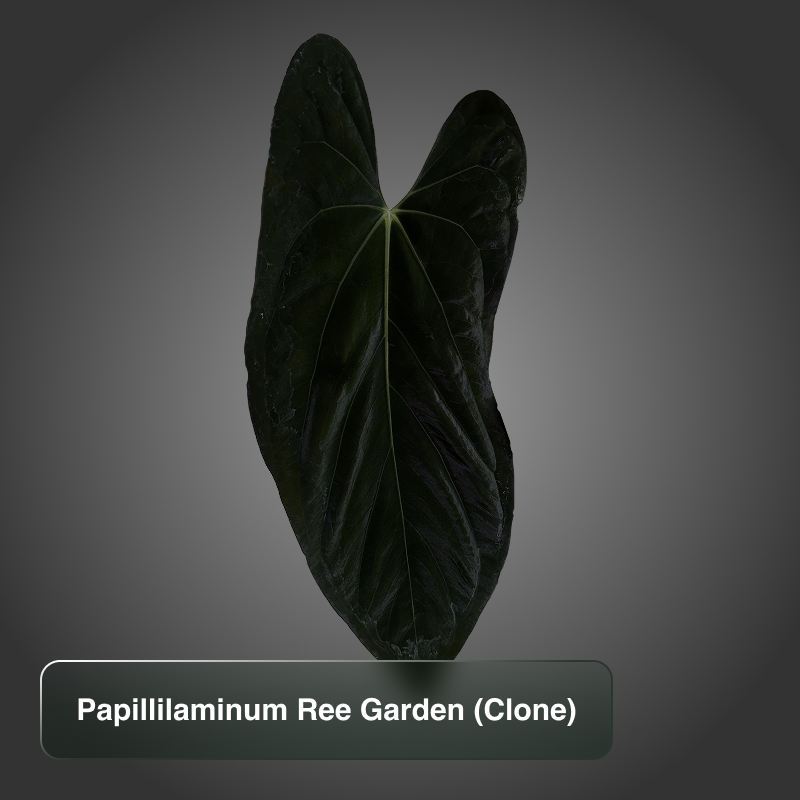
“Ree Gardens” refers to a special Anthurium papillilaminum clone linked to the renowned nursery of Marie and Steve Nock, founded in 1976 and closed in 2023. Its original origin is Panama, and a related type is also known in circulation as Papi “Marie” (known in Europe for quite a while now and is said to be a seed grown mutation of the clone). It stands out from other specimens of the species through its very narrow leaf shape, open sinus, and velvety dark green leaf surface.

banner_image

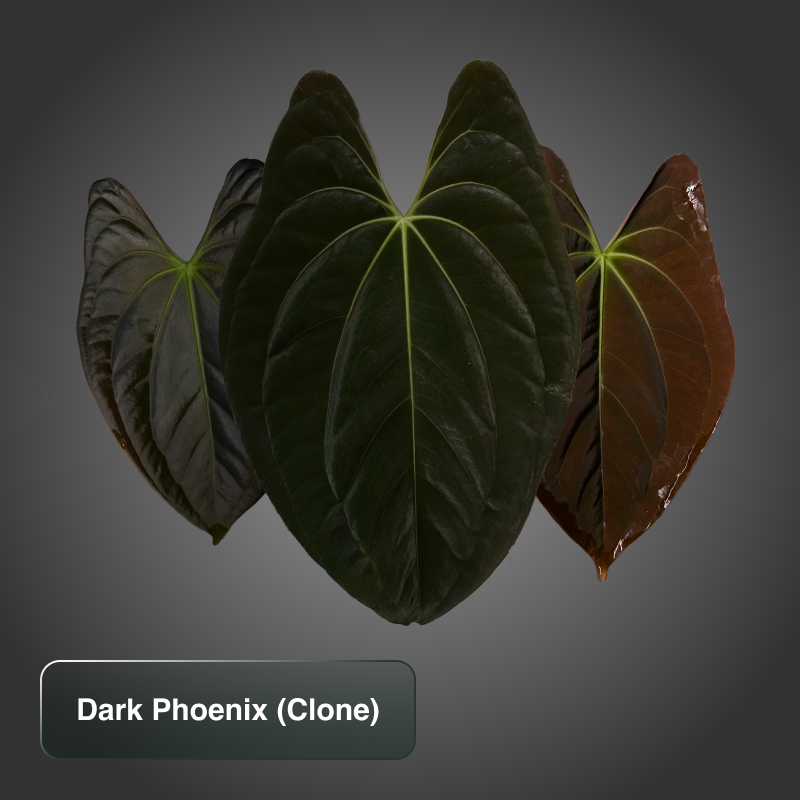
Anthurium ‘Dark Phoenix’ is a rare and highly sought-after plant known for its dark, velvety leaves, which emerge bronze-purple and mature into a deep olive to nearly black tone. Although it has often been associated with Anthurium papillilaminum or sold under names such as Papillilaminum x Dressleri or TC 782, it more likely resembles newer pure forms of Anthurium papillilaminum. Today, the name “Dark Phoenix” is widely used as a cultivar-like label for plants with these distinctive traits.


It is worth noting that today many similar or related forms are marketed under the name Dark Phoenix. In particular, a large wave of tissue-cultured plants released since 2025 has been sold under this label. A key issue is the lack of transparency regarding the exact source material used in production. As a result, many of these plants display varying traits and often resemble hybrids, rather than fully representing the original characteristics associated with this type.

banner_image

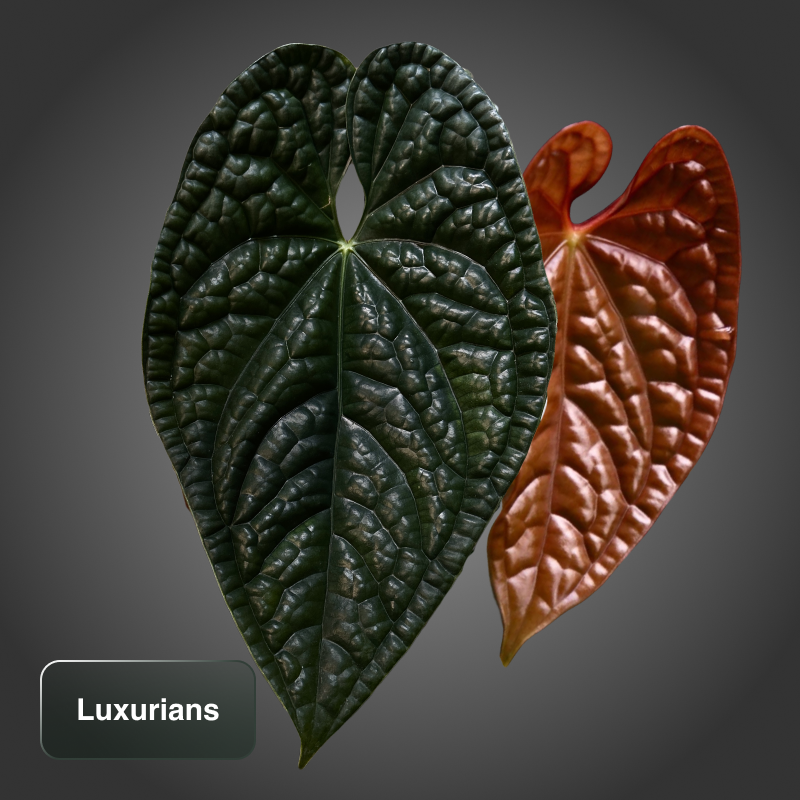
Anthurium luxurians is a species native to Colombia, although its exact natural habitat remains unknown. First described by Dr. Tom Croat (Missouri Botanical Garden), it was previously misidentified as Anthurium splendidum, a distinct species from cooler mountain regions.

The plant is known for its thick, leathery leaves with a strongly bullate (blistered) surface. These sculptural “facets” reflect light in a unique way and are likely an adaptation to low-light environments, increasing the effective leaf surface. New leaves emerge reddish-brown, sometimes with silvery tones in young plants, before maturing into deep green to almost black.


It grows relatively slowly and remains compact, with large but structured leaves and ridged petioles. While it was once extremely rare and expensive, it has become more accessible through tissue culture, though it is still considered rare in its natural context. Another fun fact about this type: The genetical impact in hybrids is quite dominant. Even as a pollen parent it delivers the structural assets very well to the new generations. Hybrids (for example with Carlablackiae) can turn out quite stunning with the sculptural surface combined with a dark, velvet shimmer.

banner_image

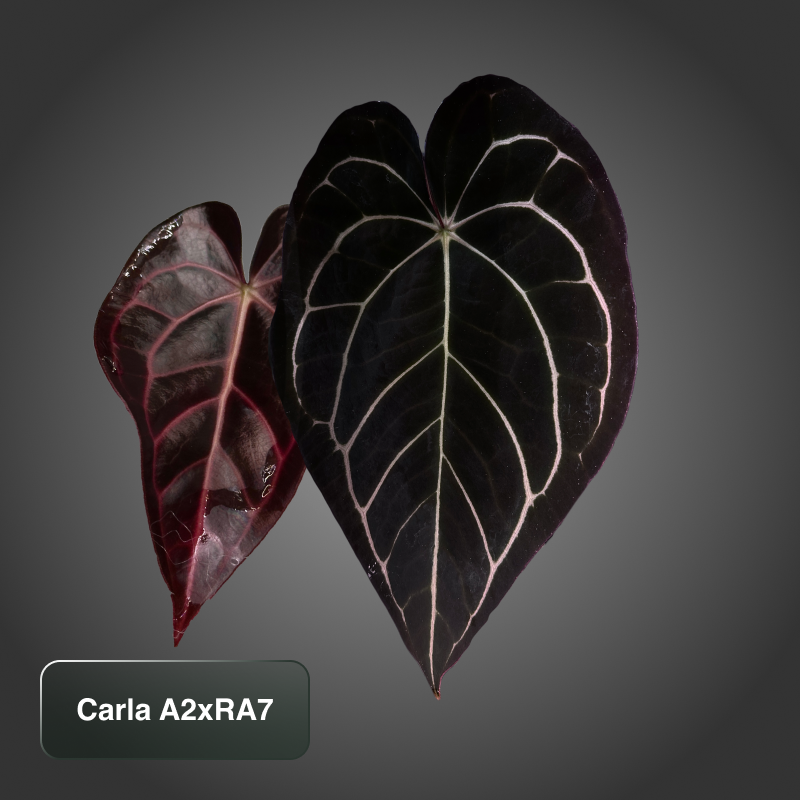
Anthurium carlablackiae is considered one of the most well-known and sought-after types among Anthuriums. It is especially valued for its striking contrast between the dark leaf surface and its prominent white veins, which can appear either broader or finer depending on the form. The species shows considerable variation, and well-known collectors and breeders such as Jay Vannini, Rory Antolak, Scott Cohen, and Paul Marcellini have each tracked their own selected forms through numbered lines. The species was originally discovered by Carla Black near Puerto Obaldía, Panama, in 2009 and was later named in her honor.


The plant is characterized by short, ribbed red petioles that may darken over time, as well as red cataphylls. Its leaves are heart-shaped, with emerging foliage that can appear red to reddish green before hardening off into a deep blue-green, sometimes almost black, tone. Cooler temperatures and lower light levels can intensify this dark coloration. The leaf undersides are pale with red primary lateral veins, while the upper surface features white to slightly greenish veins. The sinus is narrow, V-shaped, nearly closed, and can occasionally show a slight red-purple tint.


The A2 × RA7 combination comes from two clones that Rory Antolak passed on to Samuel A. While RA7 is now held by several collectors, A2 remains exclusive to Samuel’s collection and, as of 2026, has neither been sold nor selfed. This makes the cross the only available form of A2 genetics currently on the market. Its young leaves emerge in dark pink to brown tones before maturing into very dark green. The veins are relatively fine, similar to those of RA7. The inflorescence shows the characteristic traits of carlablackiae, with a white spathe and softly pink-tinted margins.
banner_image

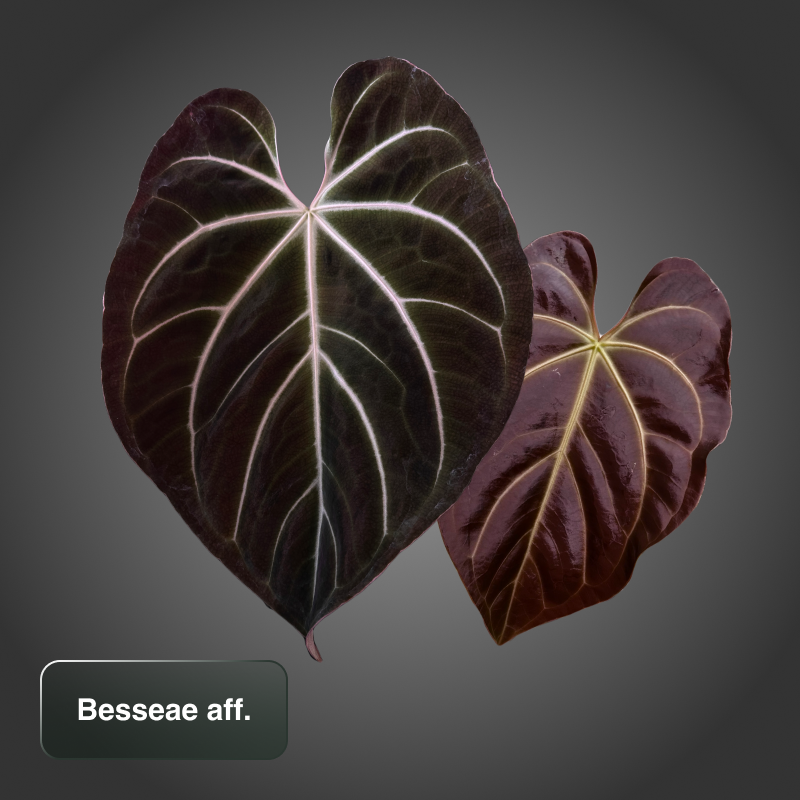
Anthurium besseae aff. refers to plants that resemble Anthurium besseae but cannot be assigned to that species with certainty. In the hobby market, however, the name is used more specifically for a particular group of plants that became widely distributed through Ecuadorian nurseries around 2021.


These plants often resemble Anthurium crystallinum, sharing dark velvety leaves, a heart-shaped form, and prominent veins with a silvery double outline. What sets besseae aff. apart are its new leaves, which often emerge in an oily dark blue tone, its more greenish-yellow rather than white venation, and its usually darker mature leaf color. The leaf shape is also more variable, ranging from wider sinuses to more elongated forms and unusual vein patterns not typically seen in crystallinum.

banner_image

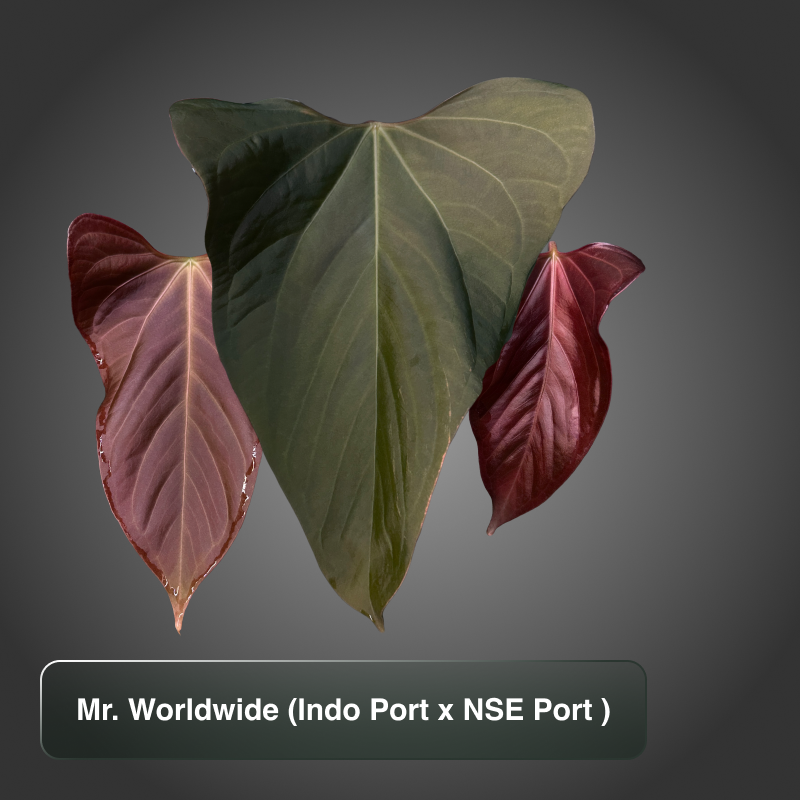
Anthurium ‘Mr. Worldwide’ is a hybrid created in 2022 by the American breeder Teo Le from Anthurium Indo Portillae x Anthurium NSE Portillae. The name refers to the geographic origins of its parent plants, representing American and Asian lineages. Both parents are known for their dark leaf color and flat sinus. Rather than describing a single genotype, Mr. Worldwide refers to the entire cross, resulting in offspring with varying traits: including leaf colors ranging from greenish tones to deep black-blue, similar to the pollen parent NSE Portillae.

banner_image

This cross was created by the renowned breeder Dr. Jeff Block (DocBlock), an American physician, botanist, and plant breeder with decades of experience developing award-winning Anthurium genetics.


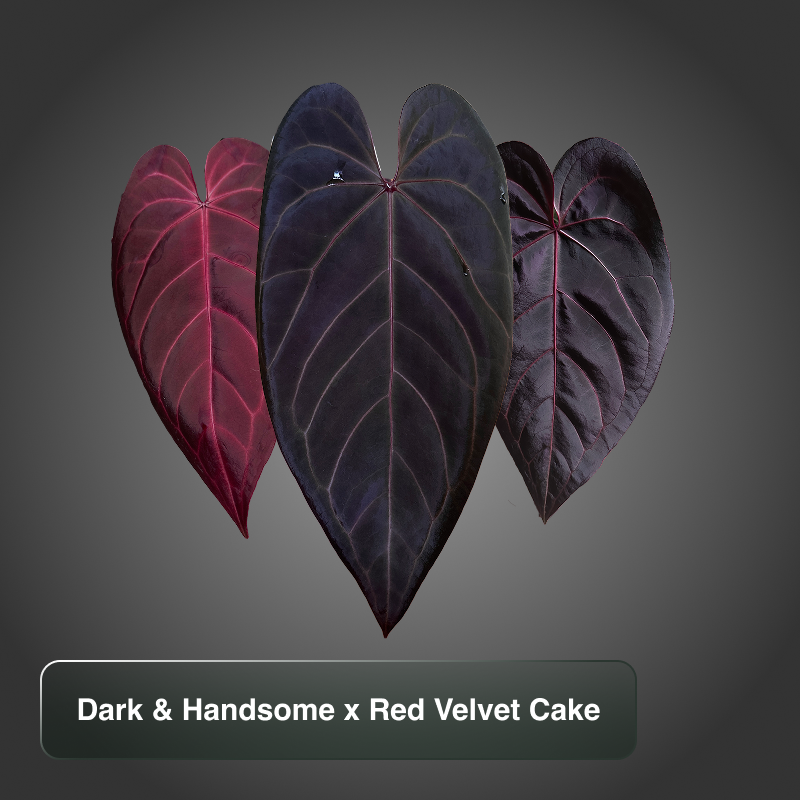
Anthurium ‘Red Velvet Cake®’ × ‘Dark & Handsome®’ combines two classic DocBlock parent plants known for producing striking hybrids with red to purple coloration, narrow venation, and moderately elongated leaves. The specimen in my breeding line was acquired in 2023 through Casa Botanica, the official distributor for the European market. It is a vigorous grower with strongly red emergent leaves that transition through intense purple and dark tones before maturing into deep green with a noticeable blue-purple shimmer. So far, I have used this plant in crosses with luxurians and carlablackiae genetics for my own hybrids.


Credit: anthuriumsbydocblock.com

banner_image

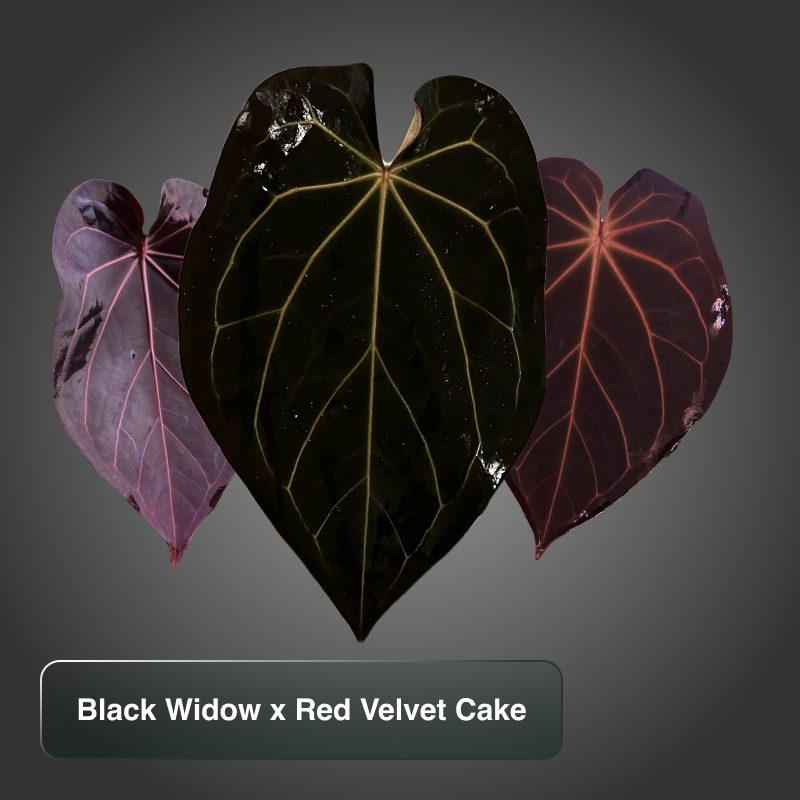
Another remarkable hybrid by the renowned breeder Dr. Jeff Block (DocBlock). This cross combines the well-known "Black Widow®" with "Red Velvet Cake®". "Black Widow®" traces back to the original "Stripey" Anthurium cultivated by Tim Anderson, whose clone was later acquired directly by Jeff Block. Over several generations, he further developed this line into the plant now known as "Black Widow®". The name was given by his children in reference to its characteristic spider-like venation, with elongated veins running prominently across the leaf and only minimal secondary veining in between.


In this pairing, "Red Velvet Cake®" contributes its dominant red tones, complementing the brown to purple emergent coloration inherited from the seed parent. The specimen shown in my breeding program has so far been used in crosses involving Dark Phoenix, Ree Gardens genetics, and carlablackiae traits from the lineage of Rory Antolak.


Credit: anthuriumsbydocblock.com

banner_image

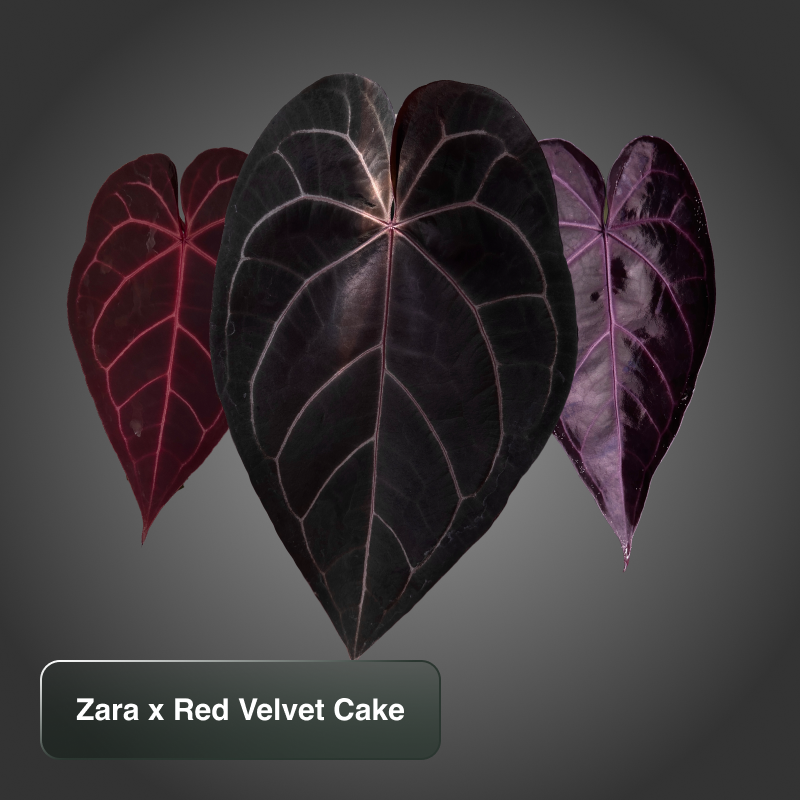
Anthurium ‘Zara’ × ‘Red Velvet Cake®’ combines two expressive DocBlock hybrids known for their rich coloration, velvety texture, and strong vigor. This cross brings together the dramatic red-brown developmental tones of Zara with the reflective velvet sheen and saturated color range of Red Velvet Cake®, resulting in offspring with strong potential for intense red emergent foliage, dark mature leaves, and prominent venation. Red Velvet Cake® is especially valued for its tear-drop shaped leaves, velvety surface, and the refined color traits seen in newer-generation DocBlock Anthuriums. Zara, a vigorous 2022 F4 hybrid, contributes its characteristic red-driven leaf development, distinctive “red-eyes” at the petiole attachment, and colorful venation on both the front and reverse of the leaf.


The specimen shown in my breeding line displays particularly dark emergent coloration, opening in deep black-purple tones with transitions through purple and red before maturing into a very dark leaf with striking silvery venation.


Credit: anthuriumsbydocblock.com

banner_image

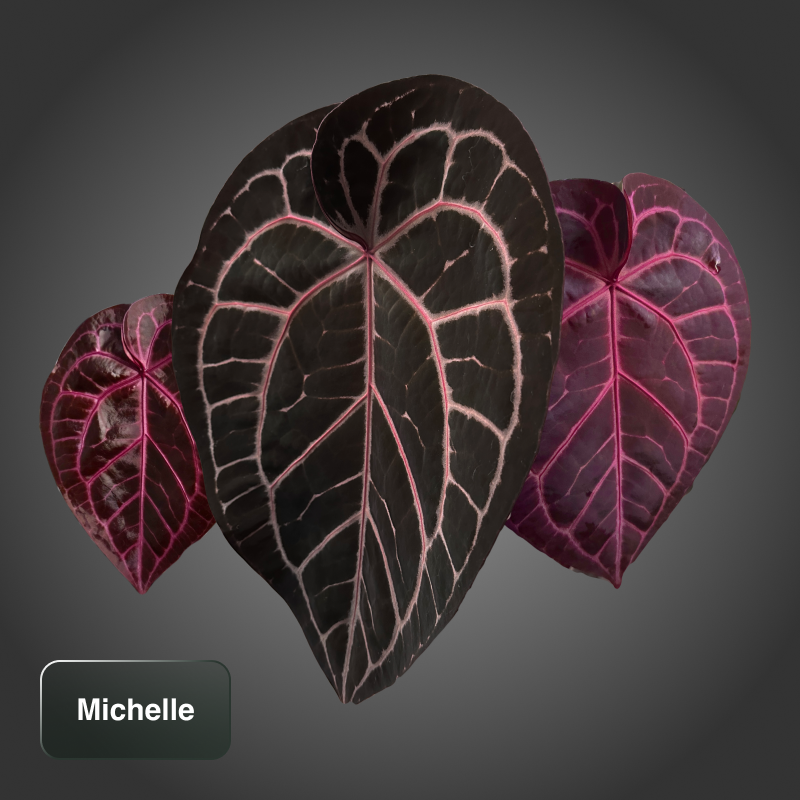
Anthurium ‘Michelle®’ is a distinctive DocBlock hybrid, selectively developed for both color and vigor from genetics dating back to a dark Anthurium magnificum cutting attributed to Tim Anderson of Daisy Farms in Miami in the mid to late 1980s. Over successive generations, Dr. Jeff Block refined the line for rounded emerging leaves and petioles with increasingly rich violet to burgundy pigmentation.


In medium filtered light, Michelle® is especially valued for its dramatic foliage development. New leaves emerge in an exceptionally dark purple tone with contrasting purple veins, then deepen through burgundy-black hues before maturing into dark green with striking white venation. A characteristic feature of this hybrid is the “X” shape formed where the petiole veins meet the central leaf axis, a detail that remains visible as the leaf develops.


The reverse side of the leaf offers an equally distinctive color progression, beginning in deep purple, softening through lavender tones, and finally maturing to light green with darker contrasting veins that echo the coloration of the petiole. With its bold contrast, unusual pigmentation, and strong growth, Anthurium ‘Michelle®’ remains one of the most recognizable and refined hybrids from the DocBlock breeding program.


Credit: anthuriumsbydocblock.com

banner_image

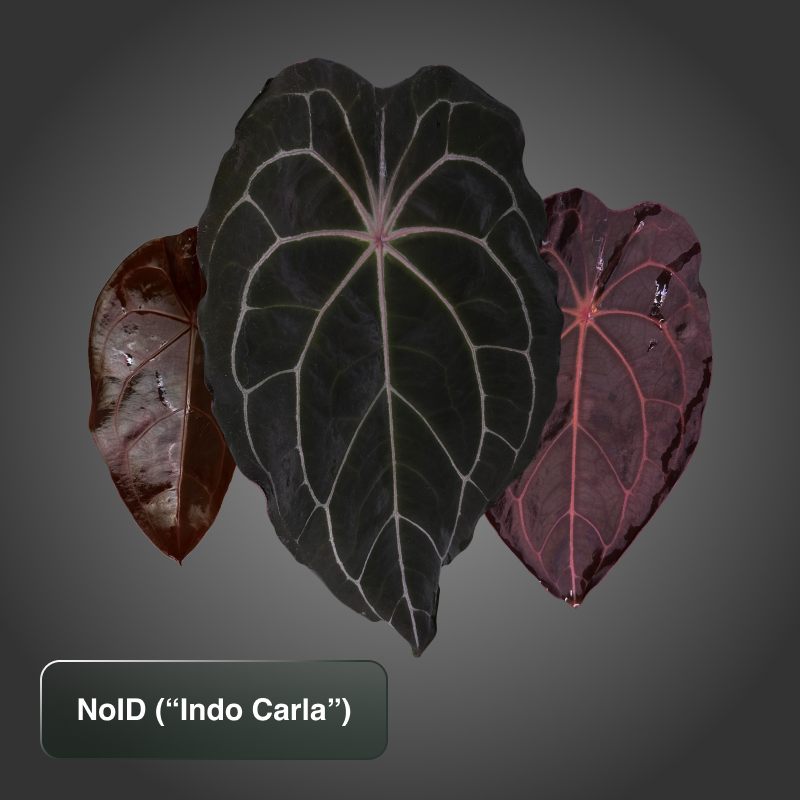
One of the few mystery plants in my collection: this specimen was purchased around 2023 under the name Anthurium "Carlablackiae" from Indonesian sources. It soon became clear, however, that this identification was incorrect, so I continue to keep it as a NoID. I still occasionally refer to it by its original trade name, “Indo Carla,” for easier reference.


Despite its uncertain identity, the plant has proven to be a fascinating breeder. It does not produce large quantities of seeds, but its offspring are remarkably diverse, showing a wide range of traits such as dark coloration, unusual venation, ruffled edges and even a fused sinus.


The plant itself has round petioles, which clearly argues against a true carlablackiae classification. Its sinus is fused in roughly 90% of cases, although some leaves occasionally differ. New foliage emerges in deep brown tones and transitions through striking shades of red to blue. Based on these characteristics, my current assumption is that it may involve forgetii and possibly besseae aff. genetics, especially when compared with similar forms in my collection.

banner_image

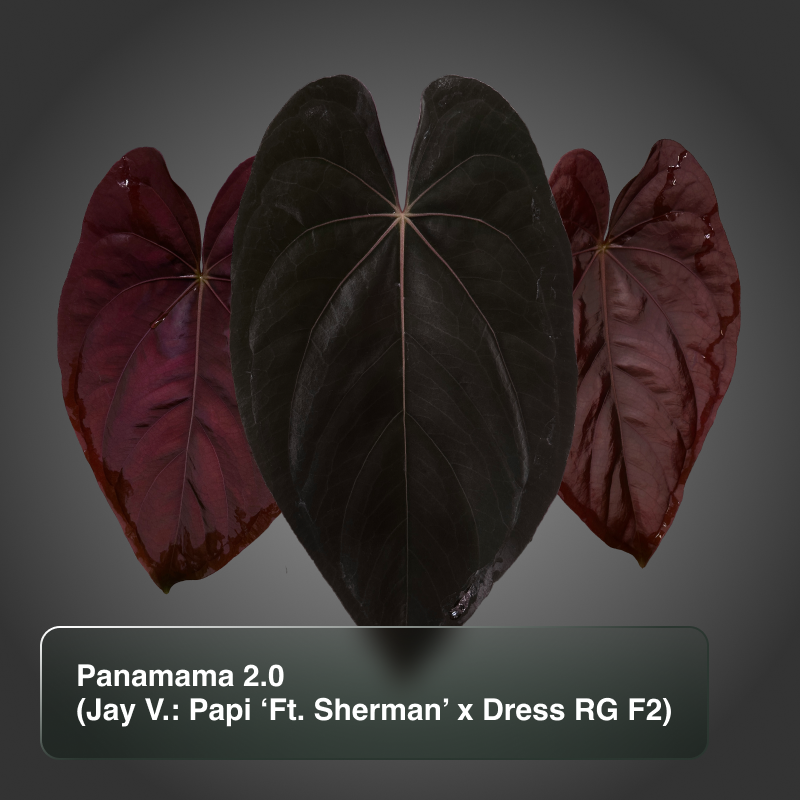
Anthurium ‘PanaMama 2.0’ by Jay Vannini is a hybrid of Anthurium papillilaminum ‘Fort Sherman’ and Anthurium dressleri Rio Guanche ecotype, combining two of Jay Vannini’s most admired parent plants. The cross brings together the elegant form and dark character of the Fort Sherman papillilaminum with the deep velvet qualities of the Rio Guanche dressleri, resulting in a hybrid with strong dark foliage expression from an early stage.


The specimen in my collection shows intense velvet texture and a rich, dark appearance even in relatively young growth, reflecting the strength of both parent lines. Among the different Pananama forms, the 2.0 is often regarded as a particularly vigorous and fast-growing version. The Rio Guanche parent is especially notable as an ecotype, meaning a geographically distinct form within the species, which likely contributes to the unique character and consistency seen in this hybrid.

banner_image

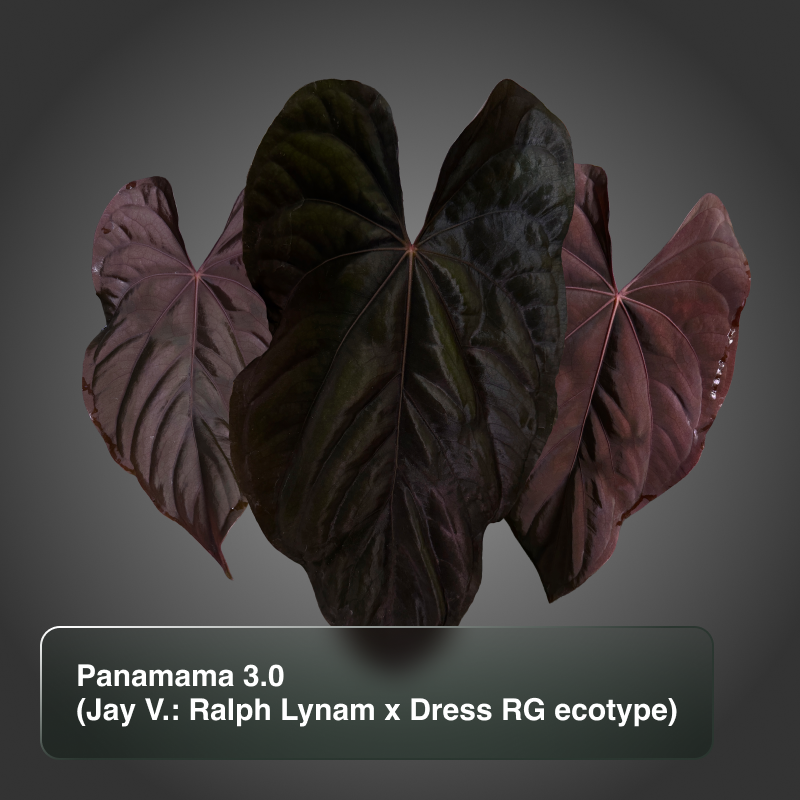
Anthurium ‘PanaMama 3.0’ by Jay Vannini is a hybrid created from Anthurium papillilaminum ‘Ralph Lynam’ and Anthurium dressleri Rio Guanche ecotype. In this pairing, the Ralph Lynam parent was selected for its characteristic wide, flat sinus, while the Rio Guanche dressleri contributes the exceptionally dark foliage for which it is well known.


The specimen in my collection already shows very dark, velvety leaf blades at a relatively young stage, highlighting the strong influence of both parent plants. Panamama 3.0 stands out for combining elegant leaf shape with intense dark velvet texture, making it a particularly striking representative of the line.

banner_image

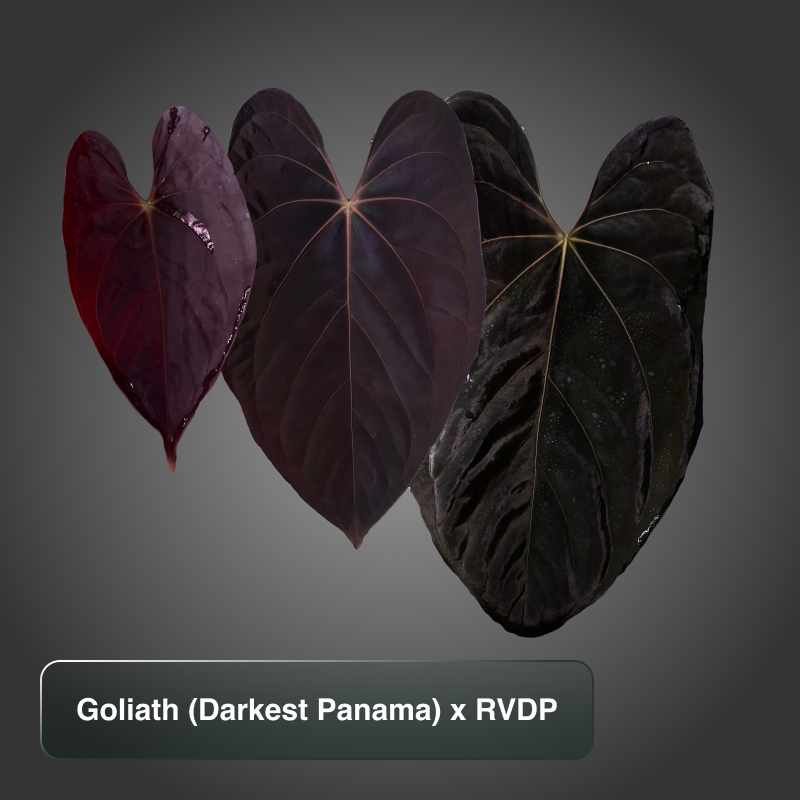
Anthurium ‘Goliath’ × ‘RVDP’ combines two highly distinctive dark-foliage types with strong visual presence and excellent breeding potential.


Anthurium ‘Goliath’ is a collector name given to a formerly unidentified Anthurium that had circulated in Indonesia, especially on Java and Sumatra, for many years under various incorrect labels such as dressleri, AoS, or “Darkest Panama.” To avoid further confusion and mislabeling, the plant was eventually given its own name. It is valued for its imposing appearance and dark, dramatic foliage, which made it stand out among older collector plants.


The second parent, RVDP (Red Vein Dark Phoenix), is a hybrid created by the Thai breeder Jeera Jugmongkol from Anthurium papillilaminum variegated × Anthurium Ace of Spades. It is known for its bold red venation set against deep dark green foliage, creating a strong contrast and an especially striking leaf presentation.

banner_image

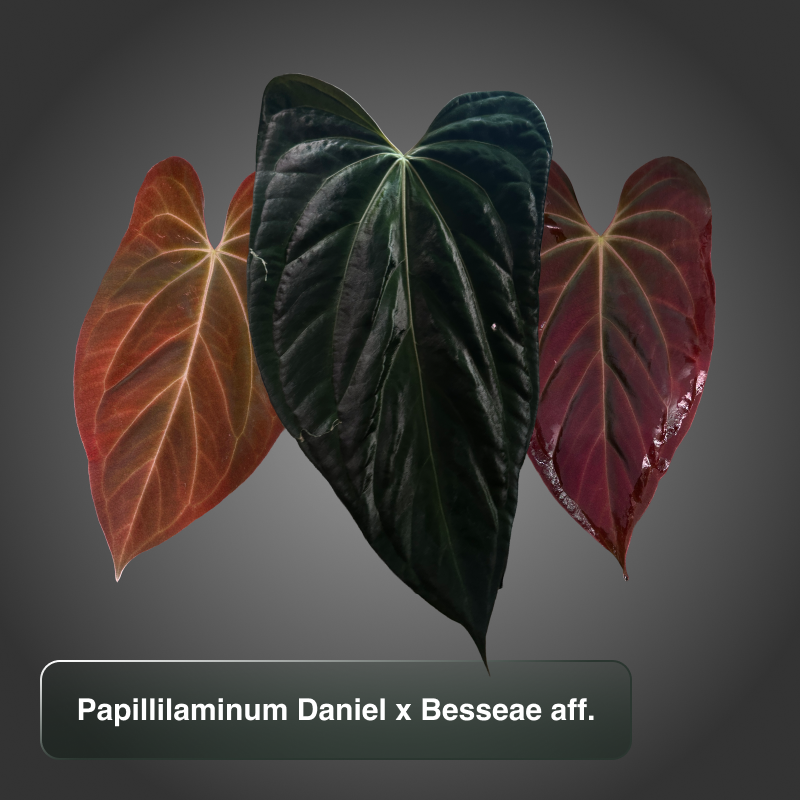
Anthurium papillilaminum ‘Daniel’ × besseae aff. combines one of the most established European papillilaminumclones with the striking traits of the plant commonly circulated in horticulture as besseae aff.. The result is a cross that brings together dark, elegant foliage structure with brighter venation and a wide range of potential leaf expressions.


The seed parent, Anthurium papillilaminum ‘Daniel’, is also known among collectors as the “old clone” or the “European collector’s form.” It is especially valued for its dark green foliage, purple abaxial leaf surface, often very wide sinus, and sharp, slightly twisted leaf shape. This clone has a long and important history in European cultivation: its lineage traces back to material brought from the United States to Belgium in the 1990s, later selfed by the collector Daniel in 2004, from which a small but influential group of plants entered botanical gardens and private collections. In my collection, this plant has become an important mother plant for several hybrids and selfings.


The pollen parent, traded as besseae aff., is not considered to be true Anthurium besseae, but rather a different closely related type, likely connected to an undescribed species from the Darién region of Panama. In cultivation, this plant is appreciated for its velvety foliage, strong venation, and variable leaf shape. The label “aff.” indicates that it is related to, but not identical with, the named species.

Shopping Cart

    Your cart is empty